Riverdale, GA · Garage Door Service
Garage Door Maintenance for Jonesboro's Older Doors
Jonesboro homes built mostly around 1968 still run extension-spring doors and early steel panels. We service them from Riverdale, four miles out, with maintenance built for that hardware.
- Repairs & new doors
- Springs & openers
- Serving 7 nearby communities
Parts We Carry
Most houses in Jonesboro went up around 1968, before steel sectional doors with torsion springs became the default. A lot of what's still hanging here is an early steel or wood door running on extension springs mounted along the horizontal tracks, with pulley-and-cable setups instead of a center torsion bar. We carry extension springs in the common cycle ratings, safety cables (a lot of 1968-era doors never had them installed at all, since they weren't required yet), replacement rollers, hinges, bottom brackets, and weatherstrip sized for the narrower door openings that era used. One limit worth saying plainly: some of the original hardware from that period isn't manufactured anymore, so a worn part sometimes means swapping the whole spring-and-pulley assembly rather than a single piece.
Across the whole service area we cover 64,766 households; Jonesboro's roughly 2,012 are a smaller slice, but the doors on them carry the same thirty-plus years of wear as everywhere else we go.
Why This Fails Locally
The climate here runs cold and moderate rather than mild, which means the steel on these older doors goes through real temperature swings every year. That cycling is hard on extension springs especially - they stretch and relax more than a torsion spring under the same load, and on a door built around 1968 those springs have usually been doing that for decades without ever being swapped. Add humidity working into exposed cable ends and pulley pins, and you get the rust-seized roller or the frayed cable that finally snaps on a cold morning.
Jonesboro's median household income sits at $50,060, noticeably under the service area's broader median of $67,872. That gap matters for the advice we give: on a door this age, we'd rather tune up what's there and replace the one or two parts that are actually failing than push a full teardown the budget doesn't call for yet.
What the Repair Takes
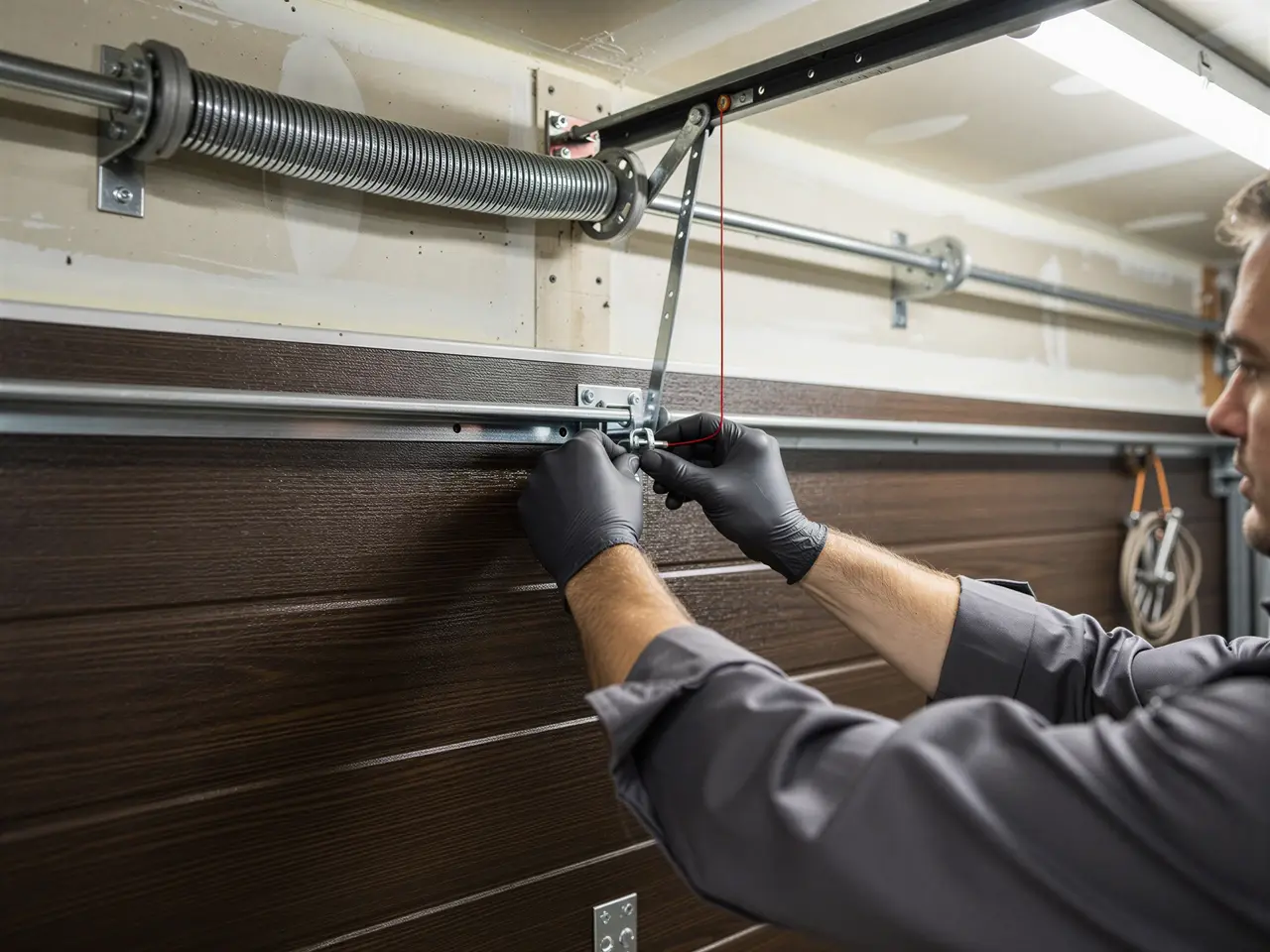
On a door from this era, the visit starts with the springs, since extension springs wear invisibly until they don't. We check stretch, look for gaps between coils, and test the safety cable if one's present - if it isn't, that's usually the first thing we add. From there it's rollers and hinges: cracked nylon, bent brackets, track alignment, since a door running slightly off its rails puts extra strain on an opener that was likely already replaced once or twice since 1968.
We lubricate hinges, rollers, and the pulley wheels extension-spring systems depend on, then run the door through a full open-close cycle checking balance by hand with the opener disconnected. If a door more than fifty years removed from its original hardware is still fighting us on balance after that, that's the point where we talk replacement instead of another round of patching.
The DIY Question
Lubricating hinges and rollers, tightening loose bolts, clearing track debris - all fine to do yourself, and it's the cheapest maintenance there is. Where we draw the line is the springs. Extension springs under tension can whip hard enough to break a hand or a window if they let go while you're working near them, and a lot of Jonesboro's doors are running springs without the safety cable that's supposed to contain that. If your door doesn't have one, that's not a project to start solo.
We're not going to pretend every call needs a truck, either. If your door is opening, closing, and holding level, you likely don't need us yet - a homeowner can tell that much without special tools. What we'd ask you to leave alone is anything involving the spring itself, winding cones, or cable replacement on a pulley system you've never worked with before.
How Long It Takes
A standard maintenance visit on one of these doors runs under an hour in most cases - inspection, lubrication, hardware check, balance test. It takes longer if we're replacing a safety cable that was never installed, which comes up more often here given how many doors predate that requirement, or if rollers have corroded enough that the door's been dragging on the track for a while.
We run this out of Riverdale, about four miles from Jonesboro, so it's a short trip rather than a cross-county haul, but we don't keep a branch or crew stationed in town - the whole job happens in one visit from the truck. If a part needs ordering because the original hardware is out of production, that's the one thing that can push a job into a second visit.
Frequently asked questions
Why does my garage door feel heavier in winter?
Cold makes steel contract slightly and stiffens the lubricant in rollers and hinges, which adds resistance right when an aging extension spring has the least stretch left to give. On a door built around 1968, that combination is usually what finally shows up as a hard-to-lift door in January.
Does my door need a safety cable?
If it's running on extension springs and was installed before cables became standard, probably not - and that's a real gap. A broken spring with no cable can launch several feet. It's a low-cost add during a maintenance visit and worth asking about directly.
Is it worth maintaining a door this old instead of replacing it?
Often yes. If the door is tracking straight and the panels aren't rusted through, tuning the hardware costs a lot less than replacement and can buy years. We'll tell you plainly if a visit turns up rot or rust bad enough that maintenance stops making sense.
More garage door services in Jonesboro
Book garage door service in Riverdale
Call now or request a quote - tell us what the door is doing and where you are.