Riverdale, GA · Garage Door Service
What a Garage Door Service Call Actually Covers in Riverdale
A breakdown of what a Riverdale Garage Door Pros service call actually includes, tied to the age of local housing stock and the climate this part of Georgia sits in.
- Repairs & new doors
- Springs & openers
- Serving 7 nearby communities
What Is Going On
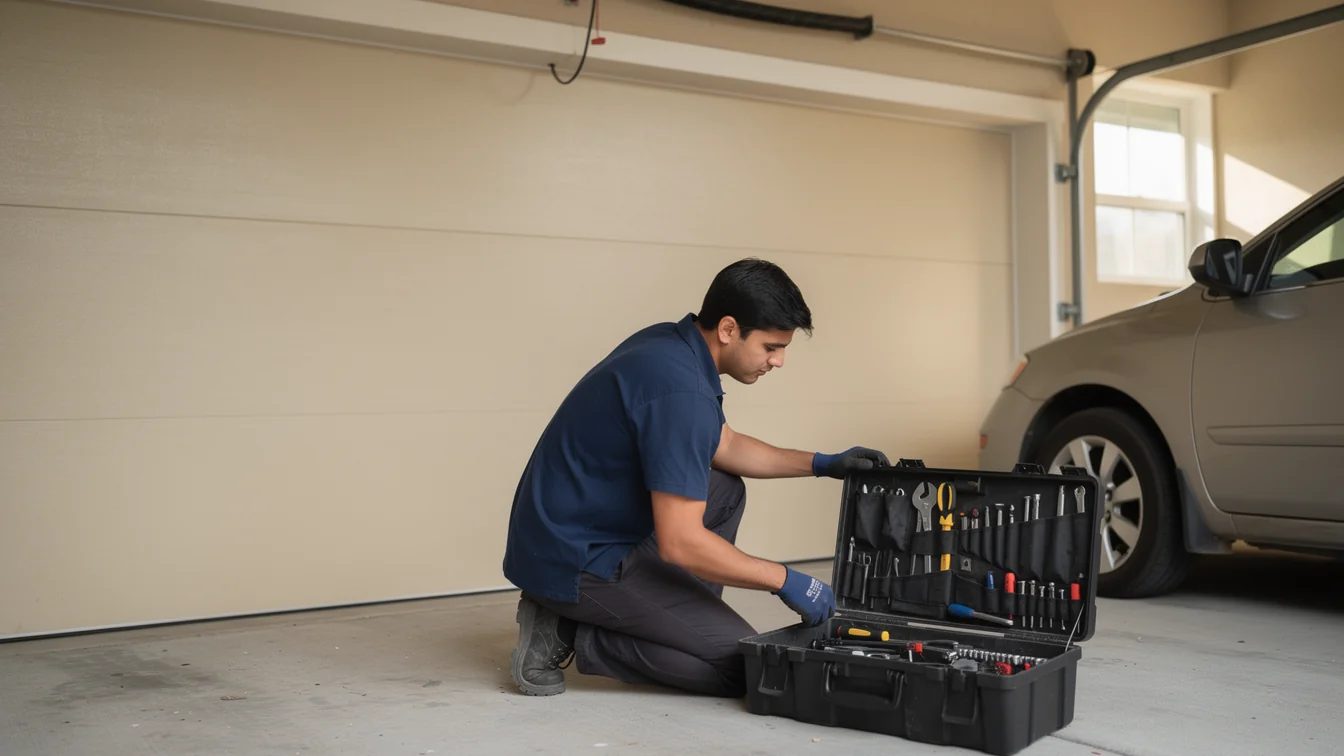
A service call here almost never starts with the customer's real problem. It starts with a symptom: the door won't open, it opens crooked, it makes a bang on the way down. The tech's first job is figuring out which part failed and whether that part is even still made.
That second question matters more in this area than people expect. Housing in the service area was built mostly between 1951 and 2007, with the median landing around 1978, and a lot of it clusters in a wave of 1960s and '70s construction spread across the 23 named areas we work in. A door from that era was often installed with hardware sized to a builder spec that newer doors don't match. So the call isn't just "fix the spring" - it's figuring out if the spring, drum, or track is even a standard size anymore, or if we're adapting a newer part to an old frame.
With 27,814 owner-occupied houses across 64,766 households in the area, most of what we see is original equipment that's aged out, not damage from one bad event. That changes the diagnosis and the fix.
What Changes With the Season
Garage doors don't fail because of one dramatic day. They fail because of steady cycling - open, close, open, close - against hardware that's been doing the same job since the house was built. In a service area where the housing stock centers on the 1960s-70s era, that cycling has had decades to work springs loose, stretch cables, and wear rollers down to the bearing.
The pattern we see shift with the seasons is less about one dramatic weather event and more about temperature swings changing how metal and lubricant behave. Grease that's fine in warm months gets stiff in cold snaps, and a spring that's already near the end of its cycle count is more likely to let go on a cold morning when the steel is tight and less forgiving. None of this is unique to any one house - it's just physics acting on old hardware, and this area has a lot of old hardware. If your door has been getting slower to open over a few months, that's usually the lubricant and the spring telling you something before the cable does.
What the Weather Here Does to It
This area sits in a cold moderate climate band - not the extreme freeze-thaw cycling of further north, but enough cold weather to matter for a door that's been in service since the 1970s or '80s. Cold doesn't usually snap a torsion spring outright, but it makes already-fatigued steel more likely to fail on the cycle it would have survived in July.
We don't get the kind of sustained hard freeze that cracks concrete slabs or warps wood jambs the way colder regions do, so the failures we see tend to be mechanical fatigue rather than weather damage to the structure itself. That's actually good news for homeowners here - the limitation I'll be honest about is that we can't tell you a cold snap caused your spring to break if the spring was already past its rated cycle count. Usually it's both: age doing the real work, and a cold morning picking the moment.
The Cost of This Job
I can't give you a number here without a tech looking at the door, and I'm not going to pretend otherwise. What I can tell you is what drives the cost up or down in this particular service area.
Because so much of the housing here was built in the 1960s-70s wave, a repair sometimes means sourcing a part that matches an older track or hinge pattern rather than grabbing something off a standard shelf. That takes more labor time than swapping a current part, and it's the biggest swing factor on an otherwise simple repair.
The other factor is what people in this area actually want done. With a median household income of $67,872, most calls we run end in a repair - spring, cable, or roller replacement - rather than a full door swap, because a full replacement is a bigger expense than most households budget for unless the door is structurally gone. If a tech tells you replacement makes more sense than another repair, it's usually because the door's past the point where patching one more part is worth doing.
Frequently asked questions
Why does my garage door only act up when it's cold outside?
Cold doesn't usually cause the failure by itself - it exposes a spring or cable that was already near the end of its life. This area's cold moderate climate means winter mornings put extra load on hardware that's been cycling for decades, especially in houses built during the 1960s-70s construction wave here.
Can you match the parts on my older garage door?
Often yes, but it depends on what's on the house. A lot of the housing stock in this service area dates to 1951-2007, and older tracks and hinge patterns sometimes need a part sourced or adapted rather than pulled off a standard shelf, which can add time to the job.
How do you decide between repair and replacement?
We look at how many separate parts have failed and whether the door itself is still square and sound. Most calls in this area end in a repair rather than full replacement, since most households here aren't budgeting for a full door swap unless the frame or panels are actually gone.
Related garage door services in Riverdale
More garage door guides
Book garage door service in Riverdale
Call now or request a quote - tell us what the door is doing and where you are.