Riverdale, GA · Garage Door Service
Opener Repair for Riverdale's Older Garage Door Systems
Opener repair for Riverdale homes built mostly between 1951 and 2007. We diagnose logic board, sensor, and drive failures tied to this area's housing age and winters.
- Repairs & new doors
- Springs & openers
- Serving 7 nearby communities
The DIY Question
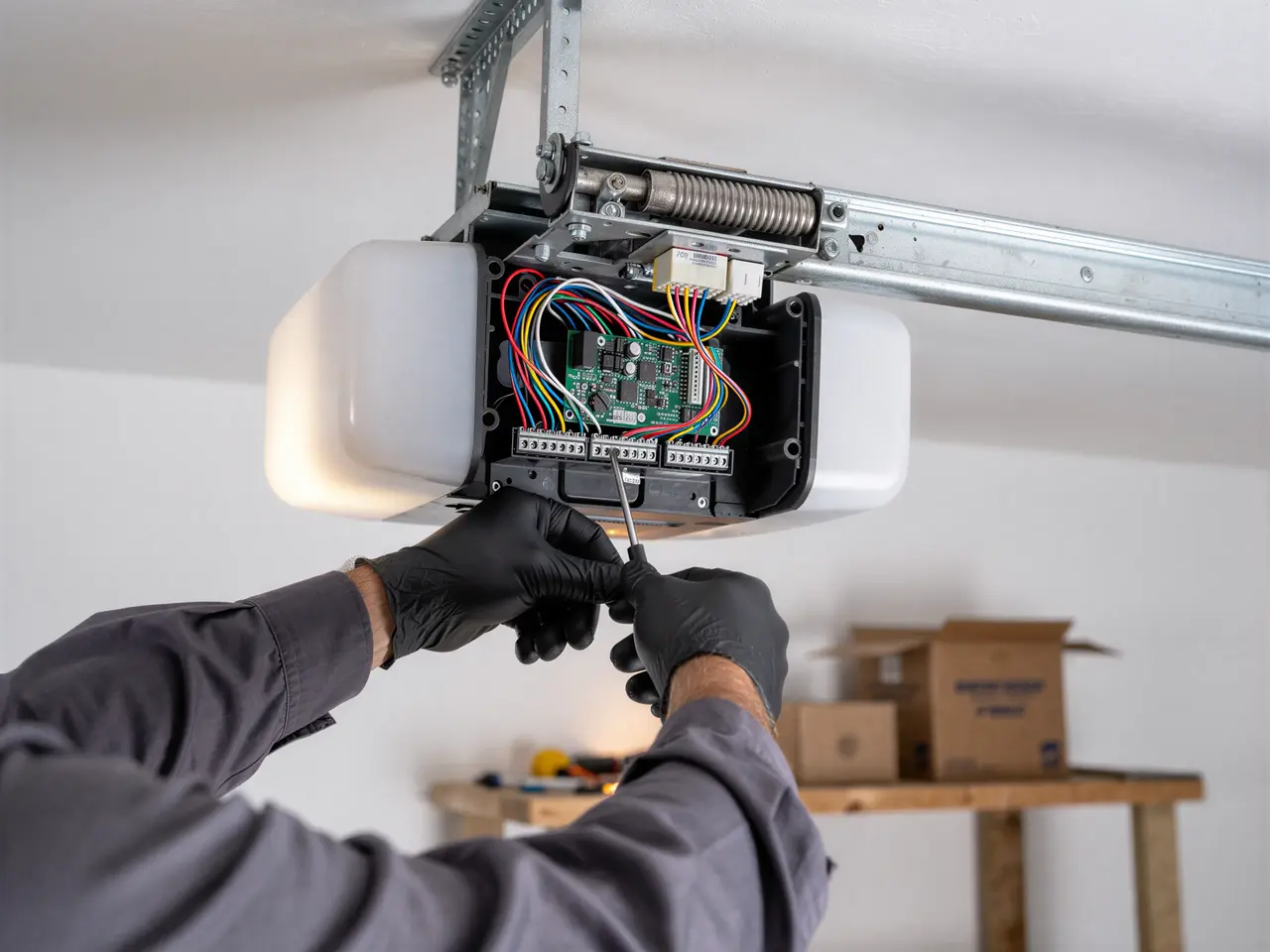
Watching a video and swapping a logic board sounds simple until you're staring at an opener manufactured before your house had the model number sanded off the cover. Across this service area, housing dates from 1951 through 2007, with a median build year of 1978, and the opener units installed in that stretch cover at least three generations of drive technology - chain, screw, and early belt. A replacement circuit board for a 1980s chain-drive unit often isn't the board you'll find at a hardware store, even if the logo matches. You can usually test a capacitor, check a breaker, or re-aim a safety sensor yourself without risk. What you can't safely do is force a motor that's grinding under load, or rewire a wall switch on a circuit that was never grounded to current code - common in houses from the earlier end of that 1951-2007 range. If the opener trips the same breaker twice, stop and call rather than keep resetting it.
Why This Fails Locally
This area's housing stock skews toward 23 named neighborhoods built mostly in the 1960s and 70s, which means a lot of openers installed during remodels or replacements in the 1990s and 2000s are now thirty-plus years into service - well past the point where capacitors, drive gears, and logic boards hold up. The climate here is a cold-moderate band: winters cold enough to stiffen grease and shrink metal gear teeth, but not so harsh that garages are built with heated space. That swing matters for opener reliability specifically. A gear that's fine in July can slip or strip in a January cold snap because the nylon gear inside most residential openers gets brittle with age and temperature cycling. In houses from the earlier side of the 1951-2007 build range, we also see openers wired into junction boxes that were updated once, maybe twice, since the house went up - loose connections there mimic motor failure and send people chasing the wrong part. The pattern repeats across this service area because the housing age and winter swing are the same from block to block, not because any one opener brand is worse than another.
The Cost of This Job
We don't publish a flat number here because opener repair cost depends on what's actually wrong - a sensor realignment and a stripped drive gear are not the same job, and a board replacement on an older unit can cost more in parts search time than the labor itself. What we can tell you: this area's median household income sits at $67,872 across roughly 64,766 households, and most of the repair calls we see land well under the cost of a full opener swap, which is why we check the cheap parts first - sensors, wiring, the wall switch - before we tell anyone they need a new motor. Replacement makes more sense than repair when the motor housing itself is cracked or when a unit built in the 1980s or earlier needs a board nobody manufactures anymore. We'll tell you which situation you're in before we start charging for diagnosis, not after.
The Symptom
The opener hums but the door doesn't move - that's the single most common call we get tied to this area's older housing stock. It usually means a stripped drive gear or a capacitor that's given out, both classic failures in units that have logged a decade or two of cold-season use. Close behind: the door reverses right before it closes, which is almost always a safety sensor knocked out of alignment or dirty, not a motor problem, even though it feels like something major. Remote works from the driveway but not from the truck is a receiver or antenna issue, cheap to fix and often mistaken for a dying board. If your opener clicks and does nothing at all, check the breaker before you call anyone - it's the one fix that costs you five minutes instead of a service call.
Frequently asked questions
Why did my garage door opener suddenly stop working in cold weather?
Nylon drive gears inside most residential openers get brittle with age, and this area's cold-moderate winters are enough to make a worn gear slip or strip that held up fine in warmer months. It's a common failure on openers that are already a decade or more old, not a sign the unit is defective from new.
Is it worth repairing an opener from the 1980s or 90s?
Sometimes. If the motor housing is sound and the failure is a sensor, capacitor, or wiring issue, repair is usually cheaper than replacement. If the logic board is dead and no longer made, or the motor itself is worn, replacement is the better call. We check parts availability before recommending either.
Why does my door reverse before it closes all the way?
Almost always a misaligned or dirty safety sensor near the floor on either side of the track, not a motor problem. Dust, spider webs, or a sensor bumped out of position will trigger this. It's one of the cheapest fixes we see and worth checking yourself before booking a call.
Do you repair openers or only replace them?
We repair when the fix makes sense - sensors, wiring, capacitors, gears - and recommend replacement only when the motor or board itself has failed and parts for an older unit aren't available. We'll tell you which situation applies before charging for diagnosis.
Book garage door service in Riverdale
Call now or request a quote - tell us what the door is doing and where you are.