Riverdale, GA · Garage Door Service
Why Your Riverdale Garage Door Lets the Cold In
Riverdale homes built mostly 1960s-1978 lose heat through worn garage door seals. See what the cold-moderate climate does to weather stripping and what it costs to fix.
- Repairs & new doors
- Springs & openers
- Serving 7 nearby communities
What Is Going On
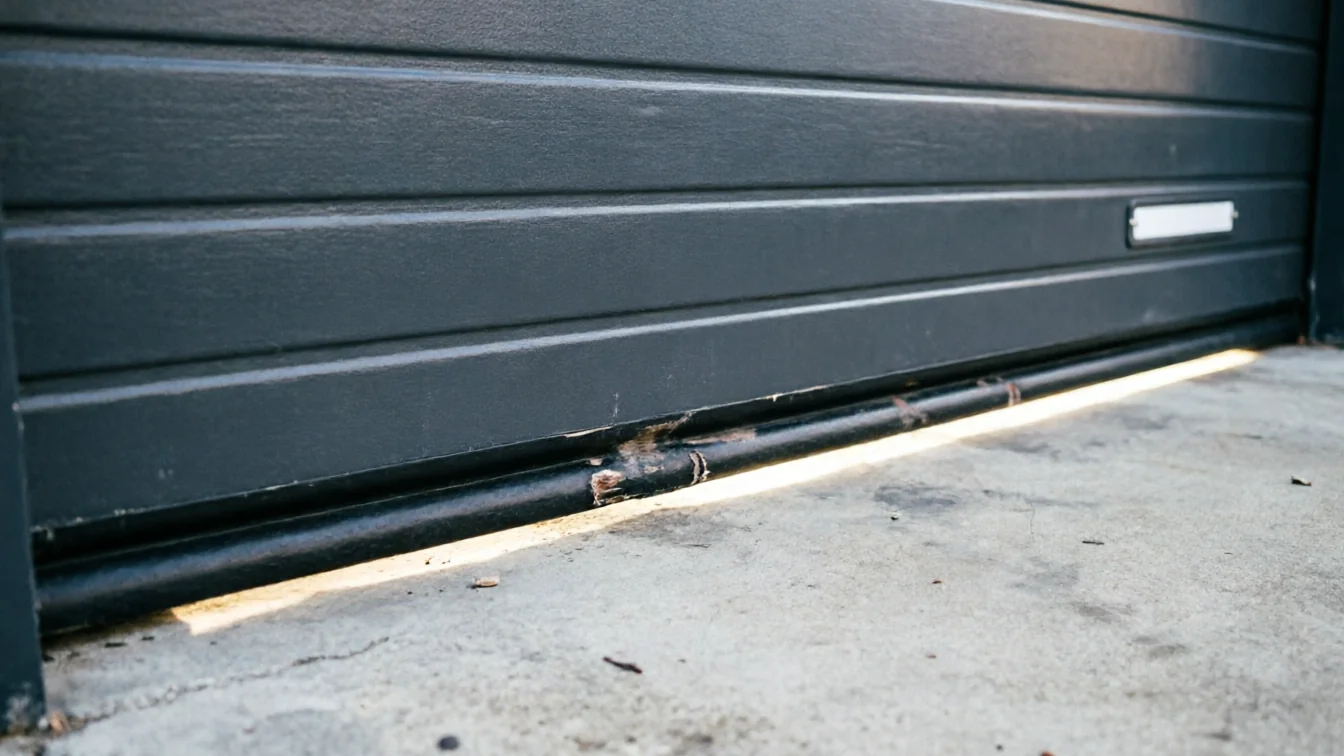
Most garage doors in this part of Georgia were put up somewhere between 1951 and 2007, with the bulk of the stock dating to the 1960s and 70s. That matters here because the bottom seal and side weather stripping that shipped with those doors were never built to last fifty years, and on a lot of these houses nobody's touched them since. What you're feeling as a draft along the bottom of the door, or daylight showing through the side jambs, is almost always the original rubber gasket gone brittle and flat. It's stopped flexing, so it stopped sealing. On the older end of that build range, you'll also find aluminum track that's shifted slightly out of plumb over the decades, which widens the gap the seal was supposed to close in the first place. This isn't a defect so much as age catching up with a part that was always a wear item. The fix is rarely the door itself - it's almost always the strip of rubber and vinyl around it that quietly stopped doing its job years before anyone noticed the heating bill.
What Changes With the Season
A seal that looked fine in July can fail by December. Rubber weather stripping contracts as it cools, and on a door that's already decades old, that contraction is often the difference between a snug fit and a visible gap. Across the 23 named areas in this service territory, the housing stock runs heavy on 1960s and 70s construction, and those garages were framed to the standards of their day - standards that didn't plan for the kind of sealed, insulated envelope homeowners expect now. So the draft you notice in October isn't new; it's the same gap that was there all summer, just more obvious once the temperature drops and the air starts moving through it. Side seals usually go first, since they take the most flexing every time the door opens. The top seal, if the door has one, tends to go second. None of this shows up on a yearly inspection unless someone's actually pressing on the rubber to check if it springs back or just stays folded.
What the Weather Here Does to It
This area sits in a cold-moderate climate band, not the kind of extreme cold that cracks concrete footings, but enough freeze-thaw cycling through the winter months to work on anything with a seam or a seal. That cycling is what actually does the damage over time - rubber that goes from damp and swollen to hard and shrunk and back again, season after season, loses its memory faster than rubber in a milder climate would. On an older torsion setup, moisture that gets past a failed seal can also sit on the spring and track longer than it should in a garage that doesn't get much airflow, which speeds up surface rust you wouldn't see on a newer, better-sealed door. It's a slow problem, not a dramatic one. Nobody's garage door blows open in a storm here. What happens instead is a steady loss of the seal's grip, a little more cold air and a little more moisture every winter, until the gap is wide enough that you can see it without getting on your knees to check.
The Cost of This Job
We don't have a set number to quote here without seeing the door, and a lot depends on whether it's just the bottom astragal or the full set of side and top seals that's gone. What we can tell you is that replacing weather stripping is a small job next to replacing a door, and most of the ones we're called out for in this area are small jobs - the seal, not the opener, not the panels. The exception is when the track has shifted enough from age that the new seal still won't sit flush, and at that point you're looking at a track adjustment alongside the seal, which is a different conversation. We won't sell you a full door replacement to fix a draft. If the door itself is sound and it's just the rubber that's failed, that's what we replace, nothing more.
Frequently asked questions
Why is cold air coming in under my garage door even though it looks closed all the way?
On houses built in the 1960s and 70s around here, the bottom seal is usually the original rubber or an early replacement, and it's gone flat and stopped flexing. It can look fully closed while the gasket itself no longer presses against the floor. That's the gap you're feeling.
Does the cold actually damage the seal, or is it just old?
Both. Age makes rubber brittle on its own, but the freeze-thaw swings typical of this climate band speed that up - the material swells with moisture, hardens in the cold, and loses its flex faster than it would somewhere milder.
Can I just caulk the gap instead of replacing the seal?
You can patch it short-term, but caulk doesn't flex with the door opening and closing, so it cracks and fails again within a season. Replacing the actual weather stripping is the only fix that holds.
How do I know if it's the seal or the track that's letting the draft in?
Press on the rubber where the gap is worst. If it springs back and the gap is still there, the track has likely shifted out of position over the years and needs adjusting, not just a new seal.
Related garage door services in Riverdale
More garage door guides
Book garage door service in Riverdale
Call now or request a quote - tell us what the door is doing and where you are.