Riverdale, GA · Garage Door Service
Garage Door Repair for Jonesboro's 1960s-Era Doors
Jonesboro homes mostly date to 1968, which means original extension-spring hardware on single-layer steel doors. We drive the 4 miles from Riverdale to fix it.
- Repairs & new doors
- Springs & openers
- Serving 7 nearby communities
Parts We Carry
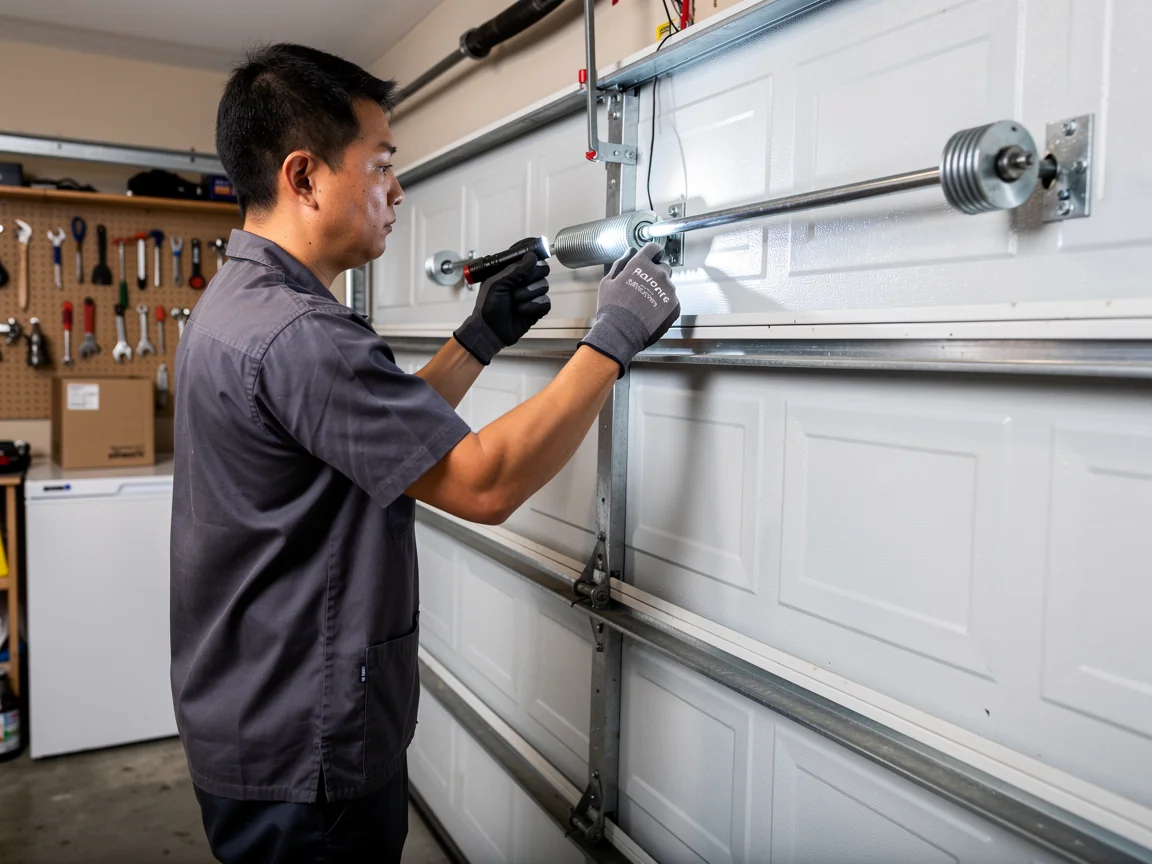
Jonesboro's median home dates to 1968, which puts most garages in this town on the tail end of the extension-spring era, before torsion springs became the standard on new construction. We carry extension springs in the common cycle-rated sizes that fit those original door openings, along with the stamped steel hinges and lift cables that wear out on doors this age. A lot of these houses still run the same 16x7 steel sectional that went up when the place was built, often a single layer of steel with no insulation sandwiched in, because that's what builders put in through the late 1960s and 1970s across this part of the county. We stock rollers and the shaft-mount brackets that match that hardware, not just the parts that fit doors built in the last fifteen years. The truck comes from Riverdale, 4 miles out, loaded for the job type this town actually needs, not a generic parts bin.
Why This Fails Locally
The fault we see most in Jonesboro isn't a modern opener board short-circuiting. It's a 1960s-era extension spring that's stretched past its rated cycle count, paired with a cable that's frayed from running over a pulley nobody's greased since the house was built. Extension springs on doors this old sit on each side, hooked to a pulley system, and when one side goes, the door comes down crooked and jams in the track. Across the broader service area the housing stock runs 1951 through 2007, median 1978, but Jonesboro sits earlier than that median, which means more of this town's garages are still running first-generation hardware instead of the torsion conversions you'd find in newer pockets. That's the fault that fits the build year here, not a panel ding or a sensor alignment issue you'd expect on a door installed in the last decade.
What the Repair Takes
On a door this old, the repair usually means replacing both extension springs as a pair, even if only one has failed, because the other is running the same cycle count and won't be far behind. We also check the pulleys and the cable anchors at the bottom brackets, since corrosion and wear show up together on hardware this age. If the track has racked from years of an unbalanced door dragging on one side, we true it up or swap the section rather than leave it fighting the opener. Jonesboro's climate band is cold-moderate, which means the lubricant and hardware finish matter more here than in a warmer zone further south - cheap zinc-plated springs corrode faster through freeze-thaw cycles than the galvanized stock we run. We don't force a torsion conversion on every job; if the extension system is otherwise sound, we replace in kind instead of upselling a system swap the door doesn't need.
The DIY Question
Extension springs are under real tension, and the pulley-and-cable setup on a 1960s door has more failure points than a modern torsion system - a slipped cable off a pulley can put a door through a car hood. If you're set on doing something yourself, lubricating the track and checking that the bottom brackets are snug are reasonable jobs for a homeowner. Replacing the springs themselves, or anything involving the cable under tension, isn't a weekend project on hardware this old, and we won't pretend otherwise. The honest limitation here: if your door's track is badly bent or the section itself has rusted through, a spring repair is a patch on a door that needs replacing, and we'll tell you that instead of billing you for a fix that won't hold.
How Long It Takes
A straight spring-and-cable job on one of these older doors is usually a single visit once we're on site, parts permitting - the common extension spring sizes for 1960s doors are stock items we carry, not special-order parts. What takes longer is diagnosing a door that's been limping along for months, where the track has racked and the opener has been fighting the imbalance; that's more inspection time before any part gets swapped. We're coming from Riverdale, 4 miles away, so travel isn't the bottleneck - it's whether the job in front of us is a clean spring swap or a door that's been compensating for bad hardware long enough that more than one thing needs attention.
Frequently asked questions
Why do so many Jonesboro garage doors still have extension springs instead of torsion springs?
Jonesboro's median home was built in 1968, when extension springs mounted on side pulleys were the standard residential setup. Torsion springs became common in new construction later, so a lot of this town's original garages never got converted and are still running the hardware they shipped with.
Do you have a branch in Jonesboro?
No. Riverdale Garage Door Pros is based in Riverdale and covers Jonesboro from there, about 4 miles out. We don't have a depot or storefront in Jonesboro itself.
Should I replace just the broken spring or both?
On a paired extension-spring system, we generally replace both sides together even if only one failed. They're running the same cycle count, and leaving the old one in means a second failure, and a second service call, within a short stretch.
Is my door too old to repair instead of replace?
Not usually, if the track and panels are sound - a spring and cable job on a 1960s door is a normal repair. If the track is badly bent or a panel has rusted through, replacement is the honest answer, and we'll say so rather than patch a door that won't hold.
More garage door services in Jonesboro
Book garage door service in Riverdale
Call now or request a quote - tell us what the door is doing and where you are.