Riverdale, GA · Garage Door Service
Garage Door Service for Riverdale's 1960s and 70s Housing Stock
Riverdale homes built mostly in the 1960s-70s still run original hardware. Here's why torsion springs and openers fail here, and what the repair actually involves.
- Repairs & new doors
- Springs & openers
- Serving 7 nearby communities
The DIY Question
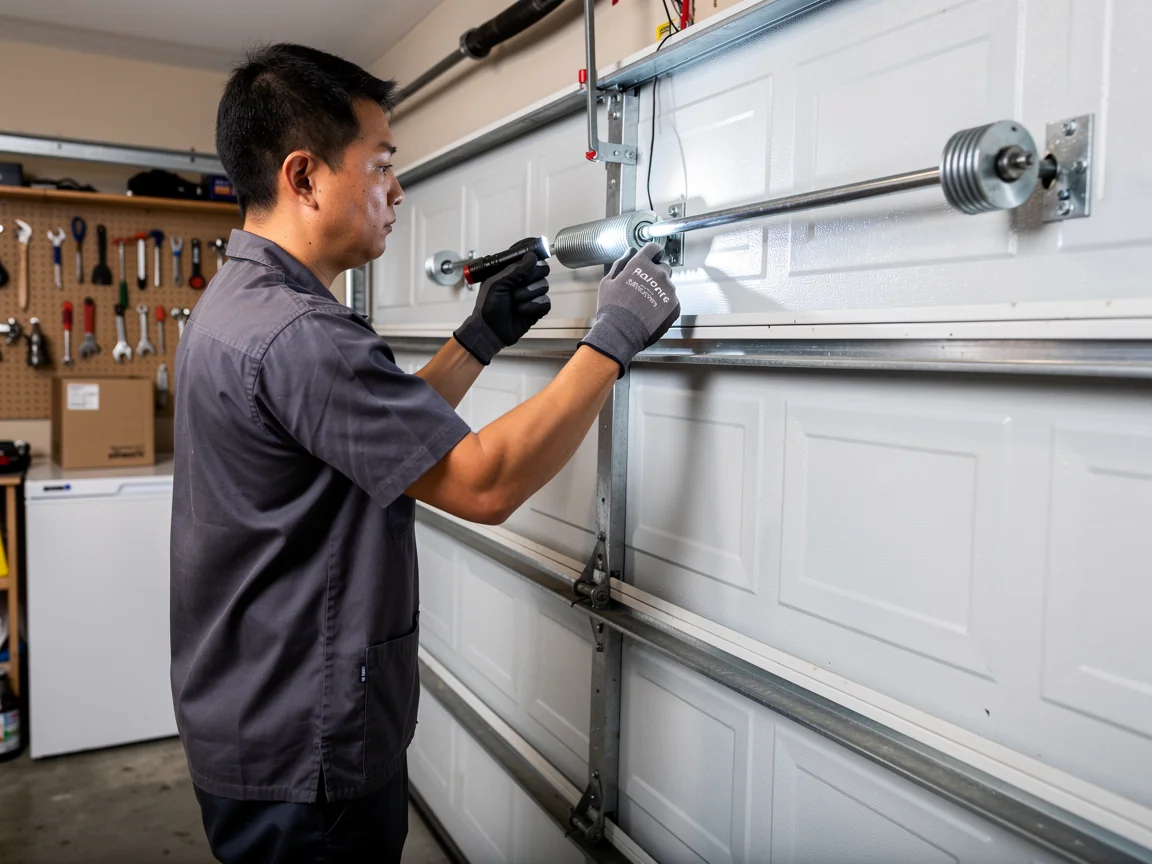
A lot of Riverdale homeowners start here: the door won't open, there's a video online, and a torsion spring kit costs less than a service call. We get why you'd try it. But torsion springs store enough energy to break a wrist or worse, and the winding bars and cable clamps that make the job safe aren't things most people keep in a drawer. If your door is from the original build era on this side of town - 1960s and 70s construction is common here - the spring size and drum setup often don't match what's sold in a big box kit. You order the wrong part, or you get the right part and no way to wind it safely. Opener boards are a different story. Swapping a logic board or a wall control is reasonable DIY if you're comfortable with a screwdriver and reading a wiring diagram. Where we draw the line: springs, cables, and anything that holds the door up under tension. That's not us being cautious for the sake of it - that's the part of the job that puts people in the ER. If you're not sure which category your repair falls into, that's worth a call before you start pulling panels.
Why This Fails Locally
Riverdale's housing runs 1951 to 2007 with a median build year around 1978, and most of the stock across the area's 23 named sections dates to that 1960s-70s window. That matters because torsion springs have a rated cycle life, and a door installed when a house was built in 1968 is now on its second or third spring if anyone's kept up with it - or still on the original if nobody has. Original hardware from that era was sized for lighter doors than what's often installed today, so when a homeowner upgrades to an insulated steel door without upgrading the spring, the old spring works twice as hard and fails twice as fast. The cold-moderate climate here adds a second stress: temperature swings make steel contract and expand, which stiffens grease in the bearings and tightens tolerances on the torsion shaft right when the door gets used hardest, cold mornings. That combination - aging original hardware plus seasonal stiffening - is why spring failure here tends to show up in clusters rather than as a random one-off.
The Cost of This Job
We're not going to put a number on this page that doesn't hold up once we're standing in front of your door, because the honest range depends on spring size, whether it's a single or double door, and whether the drums and bearing plates are original or already replaced. What we can tell you is what drives the cost up or down. A straightforward single-spring swap on a door that's otherwise sound is the cheap end of the job. It gets more expensive when the cable has frayed from riding on a worn drum, or when the track is bent enough that the door binds even with a new spring. Houses in the 1978-median range sometimes need both the spring and the drum replaced because the drum has worn a groove over decades of use. We won't sell you a spring-only fix if the drum's the real problem - that's a callback waiting to happen, and it costs you twice. Ask for the breakdown before work starts, not after.
The Symptom
The classic sign is a door that won't budge, or one your opener strains against and then stops. Pull the release cord and try to lift the door by hand - if it feels like dead weight instead of nearly weightless, the spring has let go, not the opener. A second sign, more common on original hardware from the 1960s-70s build years, is a loud bang from the garage with no obvious cause; that's usually the spring itself snapping under tension rather than failing slowly. A third pattern shows up seasonally: a door that opened fine all summer starts groaning or sticking partway through cold mornings, which points to bearing or hinge stiffness from the climate swing rather than the spring itself. Knowing which of these you've got changes the job - a snapped spring is a parts-and-labor fix, a cold-stiff bearing might just need lubrication and adjustment. Tell us which one you're seeing when you call and we'll bring the right parts the first time instead of a second trip.
Frequently asked questions
Is it safe to replace a garage door spring myself in Riverdale?
No, not the torsion spring itself. It's under enough tension to cause serious injury, and original hardware from Riverdale's common 1960s-70s build years often doesn't match the sizing in a generic kit. Opener logic boards and wall controls are reasonable DIY; springs and cables are not.
Why do garage door springs fail more in winter here?
Riverdale sits in a cold-moderate climate band, and the temperature swings stiffen grease in the bearings and tighten tolerances on the torsion shaft. That stiffness adds load right when the door gets used most, on cold mornings, which pushes an aging spring toward failure faster than it would in steady weather.
How old is the typical garage door hardware in Riverdale?
Housing in the area was mostly built 1951 through 2007, with a median year around 1978 and most stock dating to the 1960s and 70s. A lot of garages are still running original torsion hardware from that era, which is why spring and drum wear is common.
Will a new spring fix a door that bangs loudly?
Usually, yes, if the bang was the spring snapping. That's a different failure than a slow stiffening problem from cold weather, which is more often a bearing or hinge issue. Tell us which symptom you're seeing so we bring the right parts on the first trip.
Related services
Related guides
Book garage door service in Riverdale
Call now or request a quote - tell us what the door is doing and where you are.