Riverdale, GA · Garage Door Service
When a Spring Goes in Cold Weather Here in Riverdale
Riverdale homes built mostly in the 1960s-70s hit a cold snap and the torsion spring goes. Here's why this town's housing stock makes it common, and what the fix runs.
- Repairs & new doors
- Springs & openers
- Serving 7 nearby communities
What Is Going On
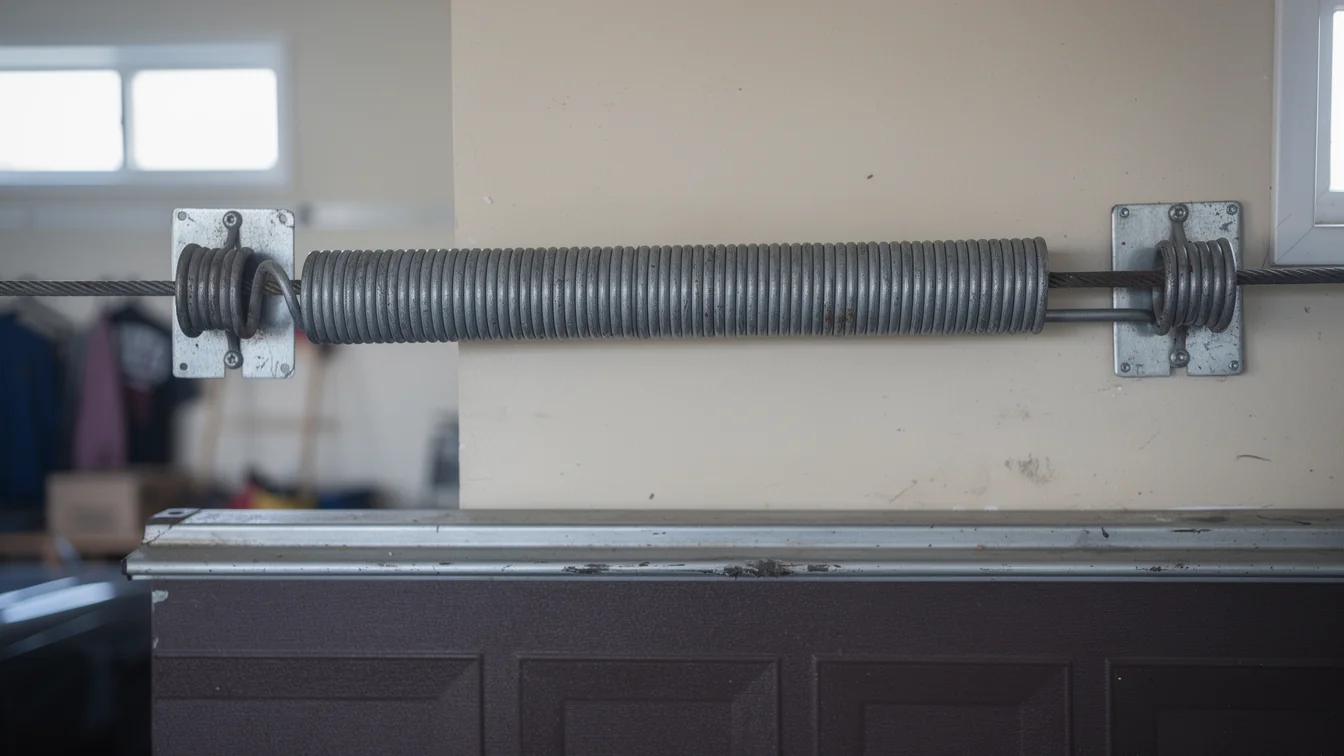
A torsion spring holds the full weight of your door, and metal contracts when the temperature drops. In a house built in the 1960s or 70s - which is most of what's standing around Riverdale, since the stock here runs 1951 to 2007 with a median year of 1978 - that spring has been flexing through decades of winters already. The steel gets brittle at the coil ends first, right where the winding cone sits. One cold morning, you hit the opener button, the door doesn't move or it drops crooked, and that's the spring giving out on a day it just couldn't take one more cycle. This isn't a sign you did anything wrong. It's a 40-to-60-year-old part finally reaching its limit on a cold day, which is exactly when steel is at its weakest and most likely to let go. If your garage was never insulated - common in homes from that era - the swing between outside and inside air makes it worse, since the spring and track see the full temperature drop with nothing buffering it.
What Changes With the Season
Riverdale sits in a cold-moderate climate band, not the deep freeze you'd get further north, but enough swing to matter. Lubricant on rollers and hinges thickens once nights get cold, so the door drags more and the opener motor works harder to pull it up. On the original hardware still found in a lot of the 1960s and 70s houses around here, that extra drag on an already-aging spring is what pushes a weak one over the edge. You'll often notice the door moving slower or louder before it actually fails - that's your warning, not nothing. Rollers that were fine all summer start chattering in the track once temperatures drop, and steel cables lose a bit of flexibility too. None of this is dramatic on its own. Stacked together on a door that's already decades old, it adds up to the kind of morning where the door just won't go.
What the Weather Here Does to It
Cold-moderate doesn't mean mild - it means enough freeze-thaw cycling through the winter to stress metal and seals repeatedly rather than once. Garage door weatherstripping on houses from the 1960s and 70s, if it hasn't been replaced, cracks and lets cold air sit directly on the spring and track instead of staying outside. That's a bigger deal here than it sounds, since Riverdale's older housing wasn't built with insulated garage doors as standard. Condensation that forms overnight on a cold steel door can freeze the bottom seal to the slab, which strains the opener on the next cycle whether or not the spring is already weak. None of this is unique to any one street - it's a function of age and weather working on the same part year after year. A door that's handled fifteen winters fine can still fail on the sixteenth.
The Cost of This Job
I don't have a price list to hand you here, and I'm not going to invent one. What I can tell you is how the decision usually breaks down for houses like the ones common in this area. On a door that's original to a 1960s or 70s build, replacing one broken spring on an otherwise sound door is usually worth doing. Replacing a whole opener system on a door with worn tracks, old cable, and a spring that just went is a different call, and sometimes the honest answer is that fixing it piece by piece costs more than starting over. With median household income here at $67,872 across the area, most owners want a straight answer on which one they're looking at, not an upsell. Call and describe what the door's doing - whether it's stuck down, stuck up, or just grinding - and that tells us which kind of job it actually is before anyone drives out.
Frequently asked questions
Why did my garage door spring break on such a cold morning?
Torsion springs get brittle with age, and steel loses flexibility as it cools. On a house from the 1960s or 70s - the typical age around Riverdale - the spring has already been through decades of cycles. Cold weather doesn't cause the failure by itself, but it's often the final push on a spring that was already near the end.
Is it normal for my door to be slower in winter?
Yes. Thickened lubricant on rollers and hinges, plus stiffer cable and seals, make the door move slower and louder once temperatures drop. If it's gradual, that's normal seasonal drag. If it suddenly stops moving or drops unevenly, that's a spring or cable failure, not just cold weather.
Should I replace the opener or just the spring?
Depends on the rest of the door. If the track, cable, and rollers are in decent shape and only the spring went, replacing just the spring usually makes sense. If several parts are worn at once on an older door, replacing more at the same time can be the better value - we'd need to look at it to say which applies to yours.
Related garage door services in Riverdale
More garage door guides
Book garage door service in Riverdale
Call now or request a quote - tell us what the door is doing and where you are.